Economists warn of regional fallout from potential U.S. strike on Iran

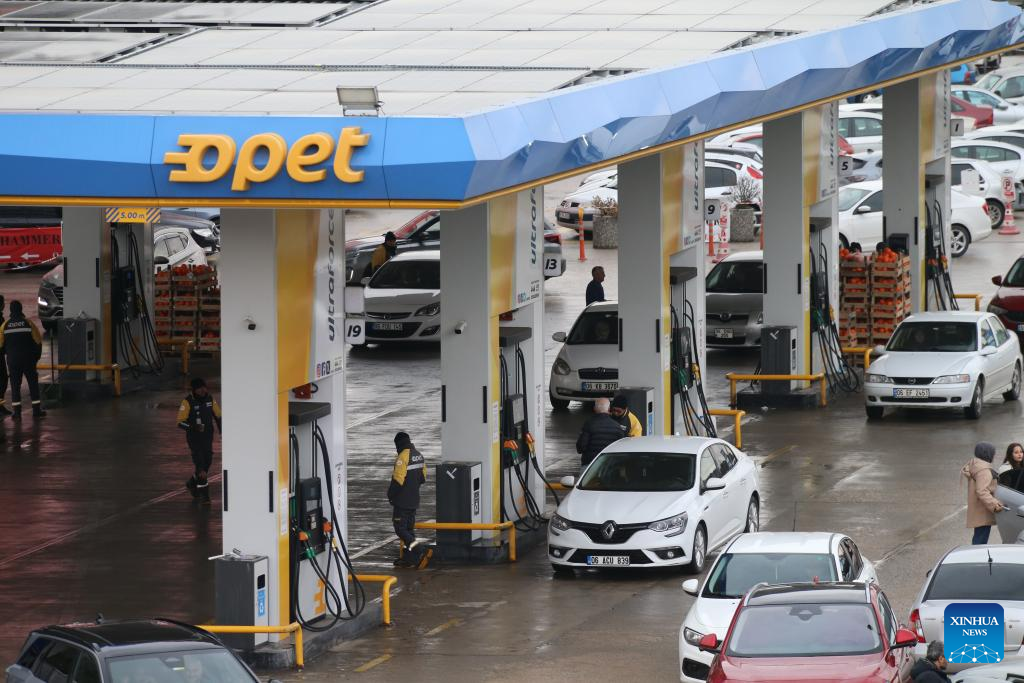
This photo shows a gas station in Ankara, Türkiye, Feb. 22, 2026. (Mustafa Kaya/Handout via Xinhua)
ANKARA, Feb. 23 (Xinhua) -- A potential U.S. strike on Iran could hit Türkiye's economy, driving up energy costs and fueling inflation, Turkish economists have warned.
Türkiye is highly dependent on imported oil and natural gas, Mustafa Sonmez, an Istanbul-based independent economist, told Xinhua.
"Any disruption or even the perception of disruption in supply routes would push prices upward, and that would directly widen the current account deficit," Sonmez said.
Heightened tensions around the Strait of Hormuz, a key transit route for global oil shipments, could trigger sharp price fluctuations even without prolonged supply interruptions, he added.
Iran and the United States held two rounds of indirect nuclear talks this month, but regional tensions remain high amid ongoing U.S. military buildup and recent Iranian drills in the Strait of Hormuz.
Higher energy import costs would push up inflation, Sonmez said.
"An oil spike to 100 or 110 U.S. dollars per barrel would significantly increase Türkiye's external financing need, and exacerbate the country's inflation rate," Sonmez explained.
"Foreign portfolio investors tend to reduce exposure rapidly when geopolitical risks rise," he pointed out. "That could mean renewed volatility in the lira, higher bond yields and pressure on equity markets."
Currency depreciation, in turn, he said, would feed into inflation by raising the cost of imported goods and intermediate inputs.
Senol Babuscu, a banking expert at Ankara's Baskent University, said inflationary pressures could emerge through both direct and indirect channels.
"When households anticipate higher fuel and food prices, they adjust spending behavior, and businesses adjust pricing strategies," Babuscu told Xinhua. "This can accelerate the inflationary cycle."
Türkiye has been pursuing a disinflation program to stabilize prices and restore macroeconomic balance. But a new external shock could undermine the process by reducing real incomes and domestic demand.
"Real wages would likely come under renewed pressure. That would weigh on household consumption in the medium term," this scholar said, adding that despite the Ankara government's tight monetary policies, inflation still remains stubbornly high.
Beyond energy and inflation, trade and logistics could also be affected. Rising security risks in the Gulf region could increase maritime insurance premiums and freight costs.
"Even if Türkiye is not directly involved in the conflict, higher shipping costs and longer transport routes would affect exporters and importers," Babuscu noted.
Both economists said that the overall impact on the economy would depend on the scope and duration of any confrontation. A prolonged disruption to energy supply would create a serious macroeconomic test, Sonmez said.
For now, he added, markets are closely monitoring oil prices, exchange rates and diplomatic developments as early indicators of potential economic fallout. ■


